Barbara Gocníková:
Broken Altar
(Isolation of Father)
Date:
Opening:
2026.07.30–08.28.
2026.07.30. 19.00-21.00
Barbara Gocníková:
Broken Altar
(Isolation of Father)
Date:
2026.07.30–08.28.
Opening:
2026.07.30. 19.00-21.00
Artists:
„We are all the leftovers of a feast at which our parents had their fill.” Eszter Babarczy: Apám meghal (Jelenkor, 2025)
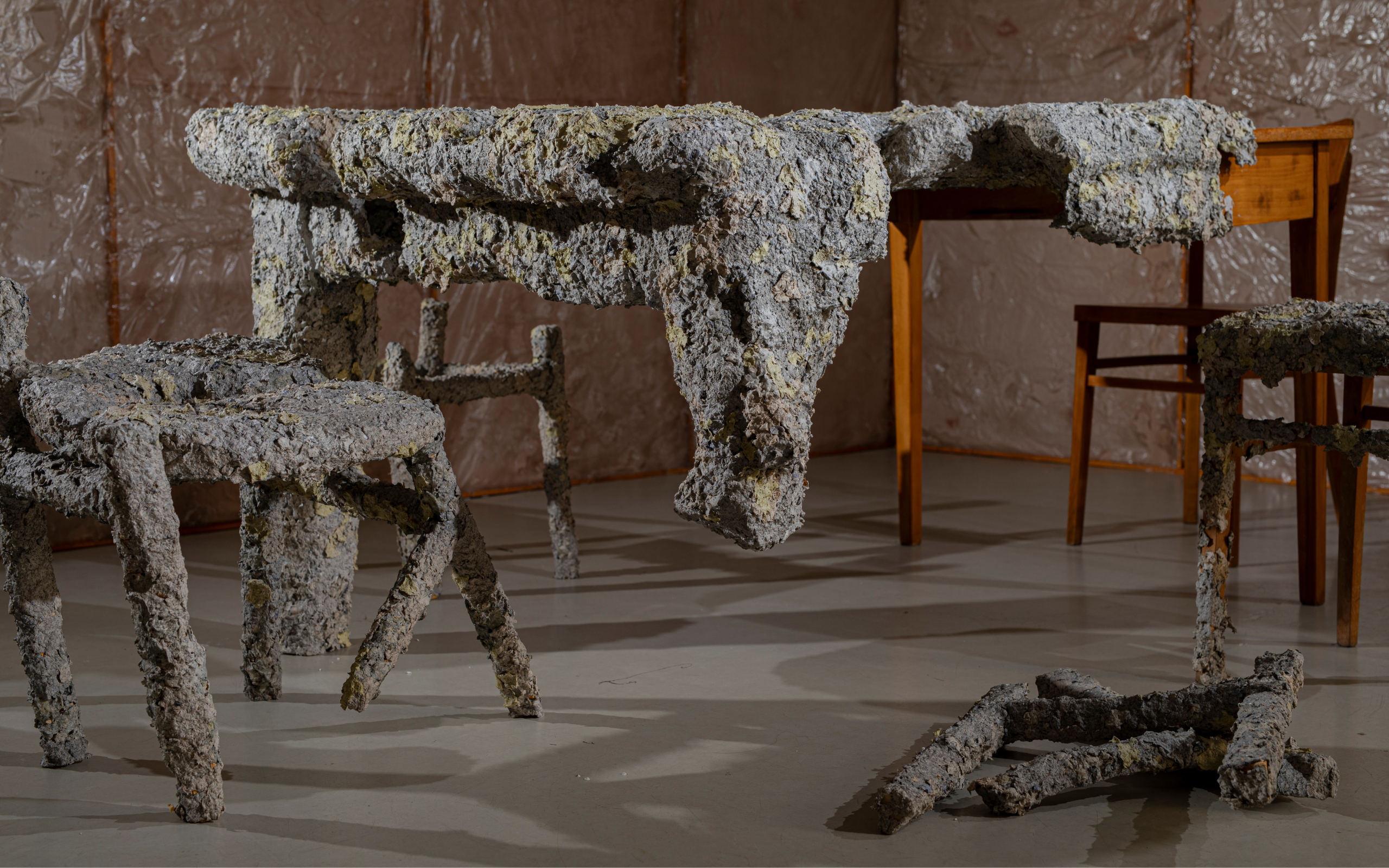
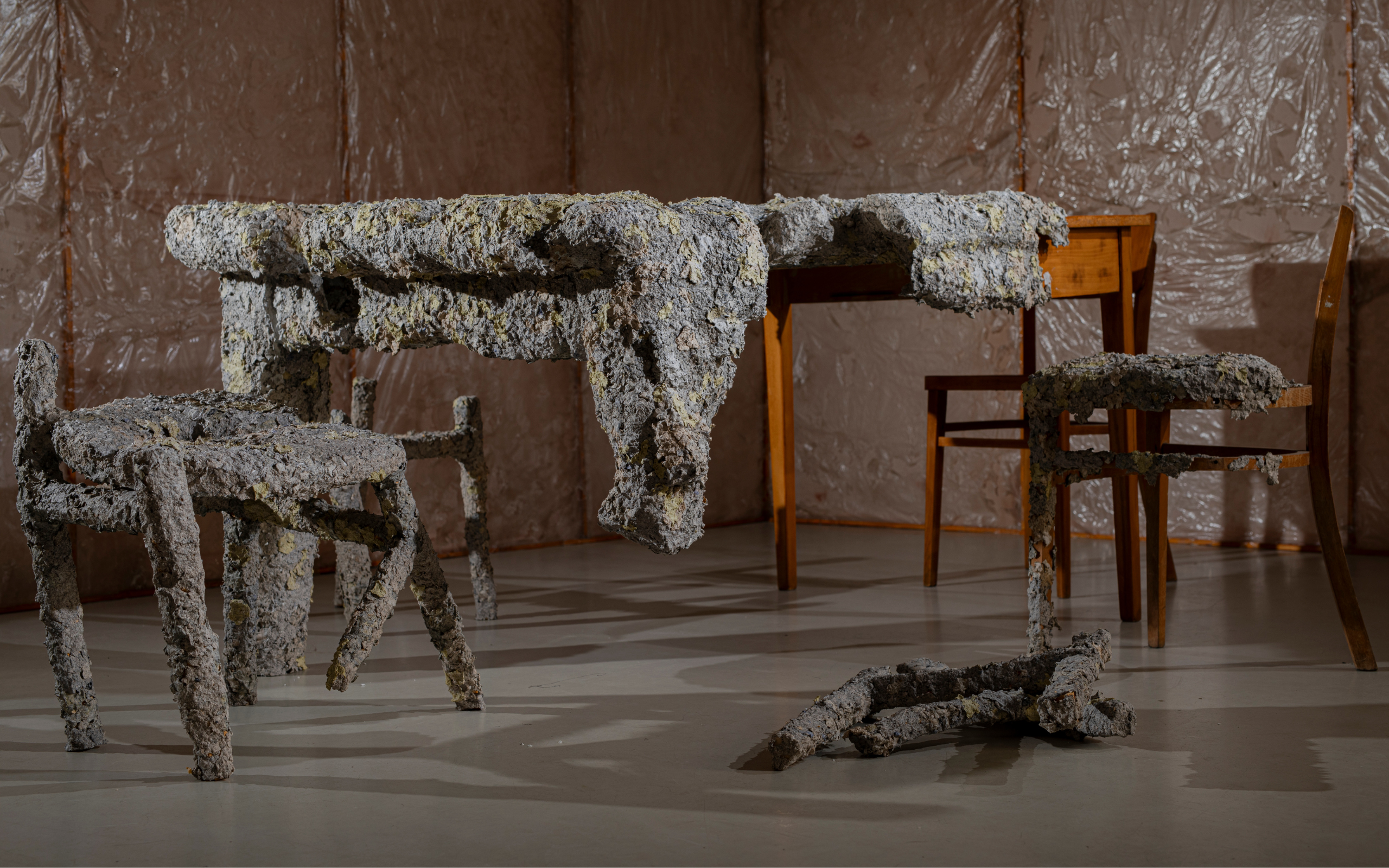
A feast where the table, as a silent witness, becomes the familiar yet unfathomable stage of family life. An object that preserves the imprint of our memories: who sits where, who speaks to whom, who places something on the table or takes something from it, and how each person relates to the others and the events that shape everyday life. A space where gestures, phrases and silences are layered upon one another across generations. A memento that reminds us that physical proximity does not necessarily imply emotional or mental presence.
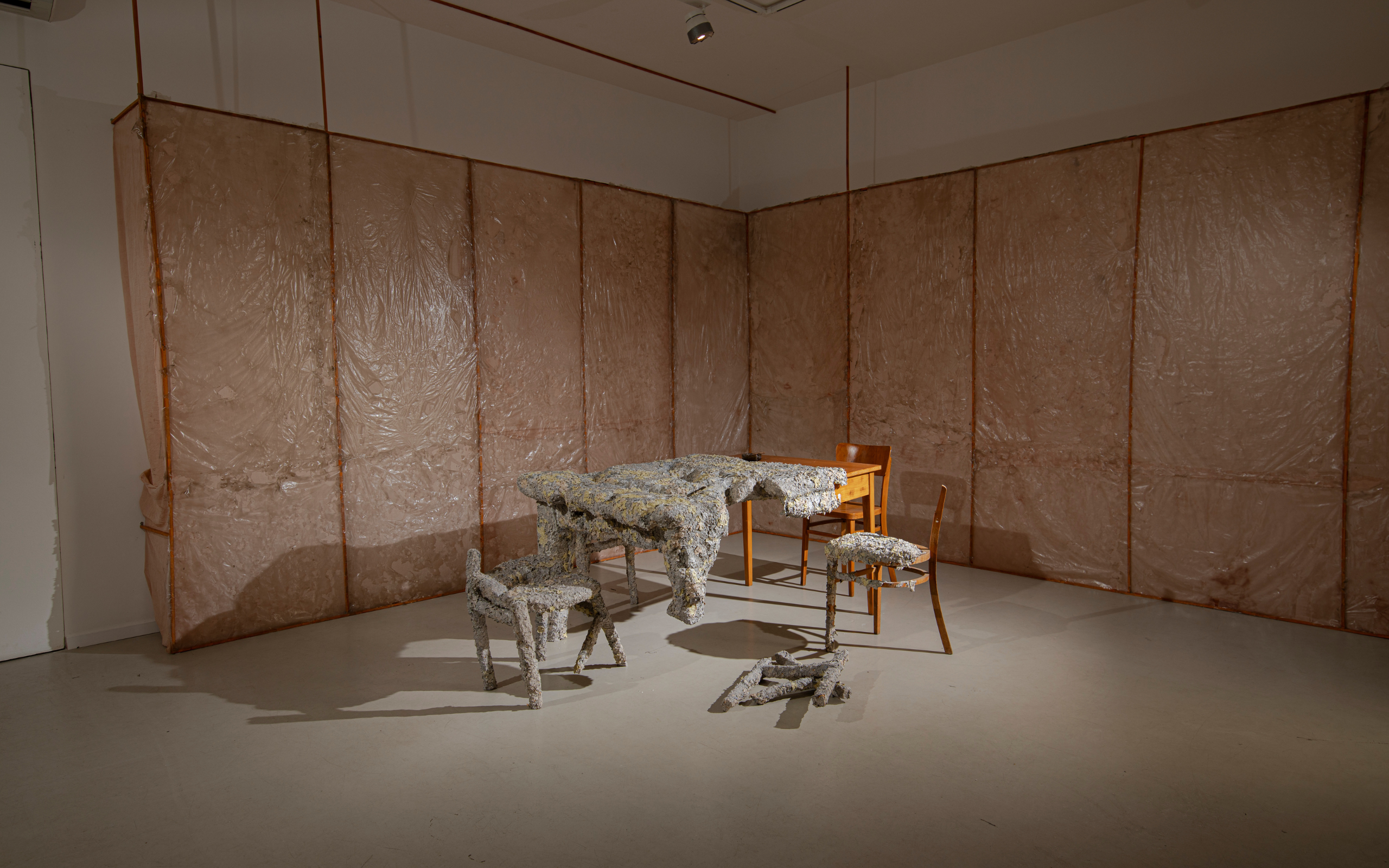
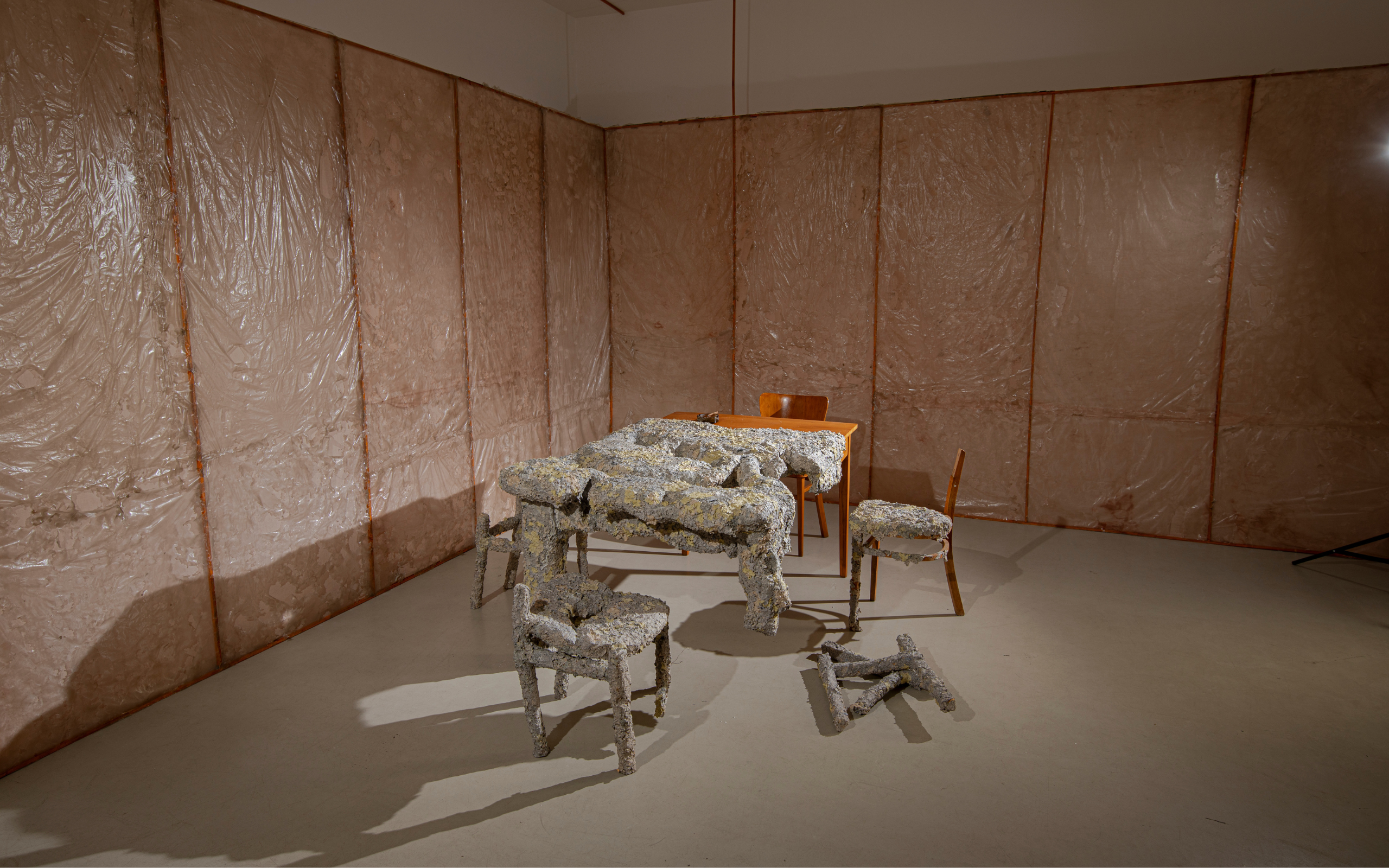
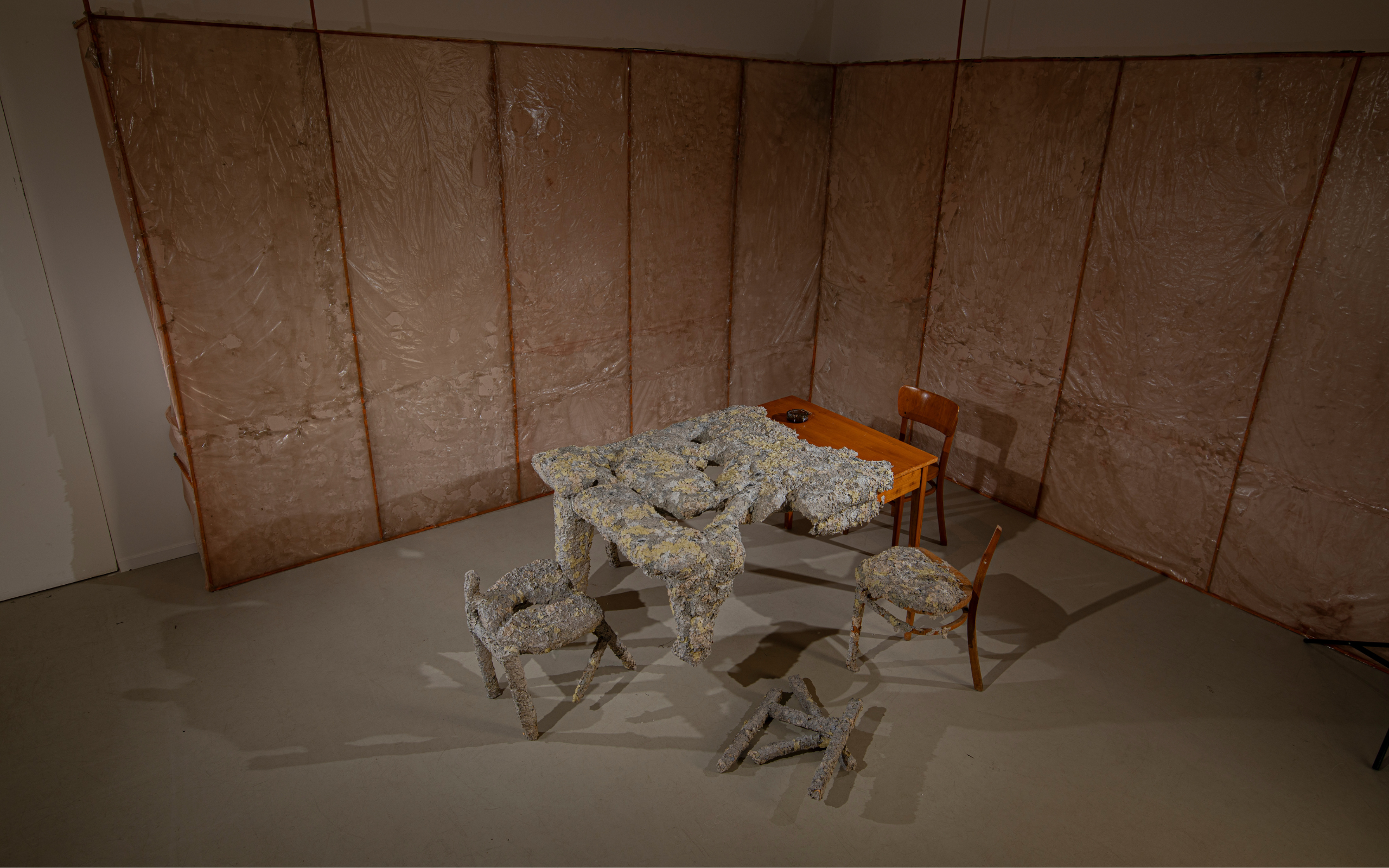
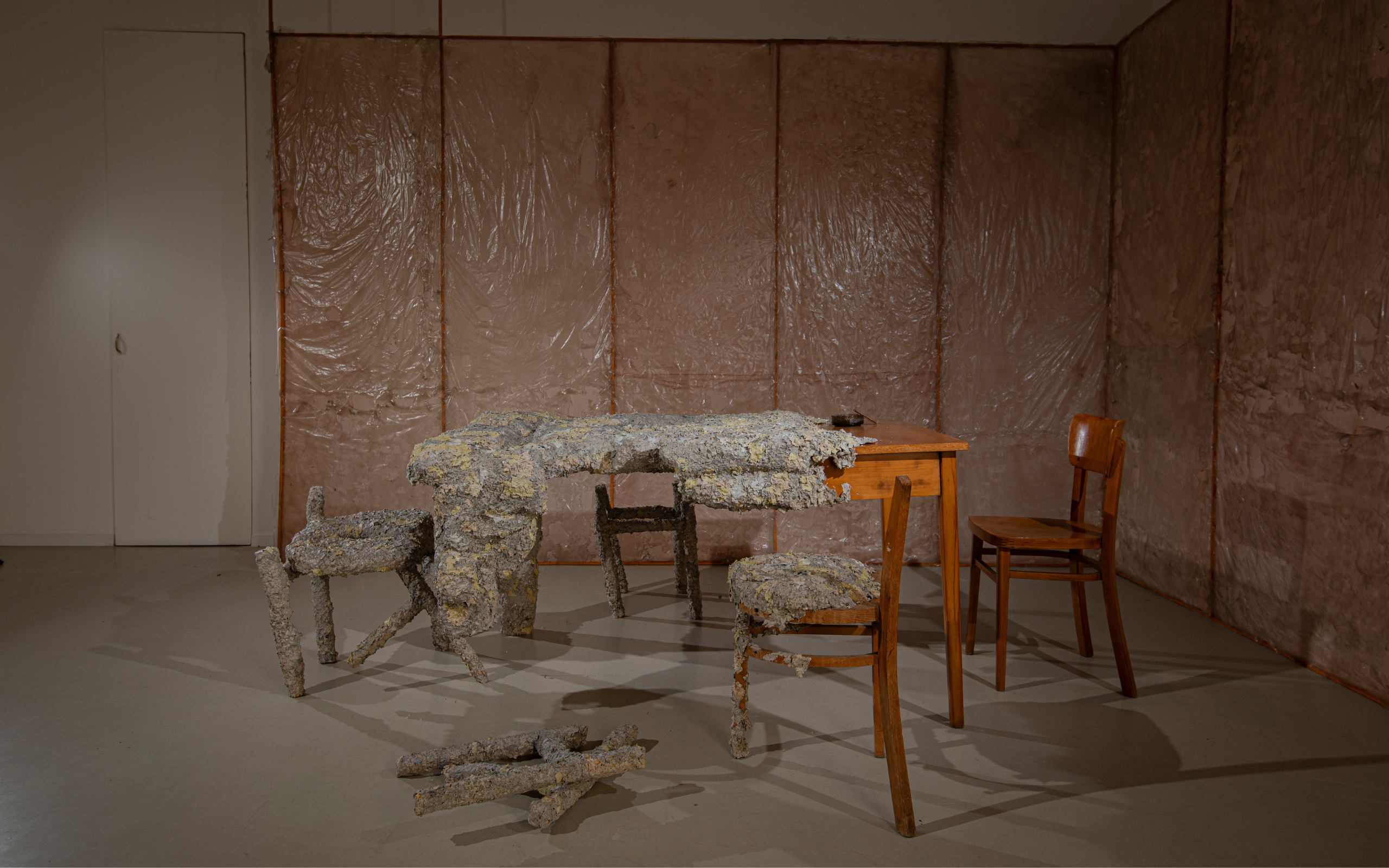
Drawing on this experience, Barbara Gocníková’s Broken Altar series brings into focus the family, its inherited patterns and its underlying power dynamics within the exhibition space. Her lyrical and deeply personal visual language intertwines with the imprint of an era, allowing the symptoms of a dysfunctional family structure to resonate with the broader historical experience of Eastern Europe. In Broken Altar: Isolation of Father, presented at Liget Gallery, the figure of the father and his relationship to the rest of the family become the central subject of the work.
The installation inhabits the gallery as if it were a dying body. The table, already overtaken by decay, exists in an isolated relationship to the family patriarch’s designated chair, which observes the unfolding events from a closed and detached position. But the decay does not reach him, his isolation does not free him from what unfolds around him; instead, it places him in direct opposition to it. This contrast reveals the father’s emotional and relational absence: a male role, often inherited across generations, in which practices of emotional distance, silence and conflict avoidance have become an integral part of family dynamics.
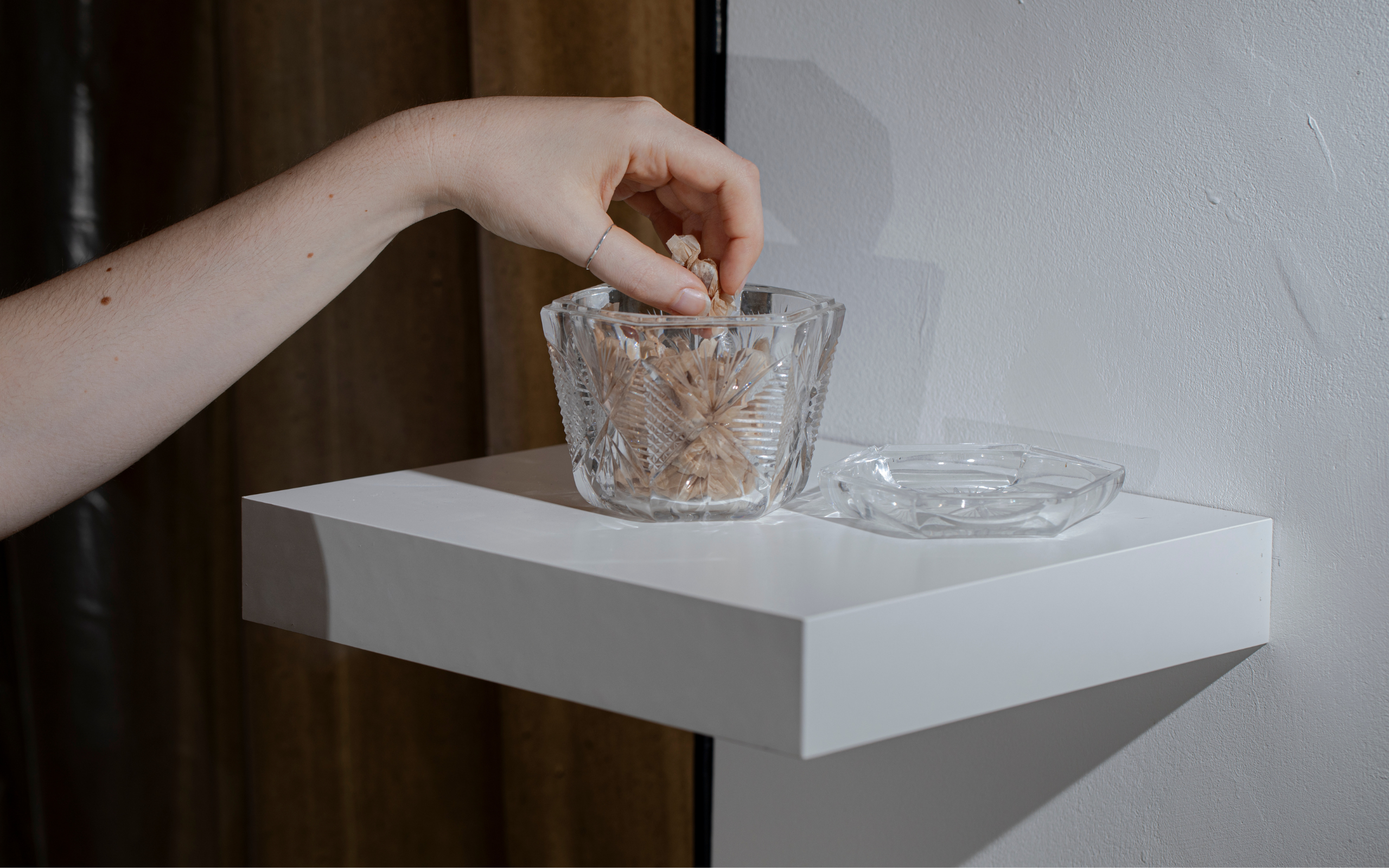
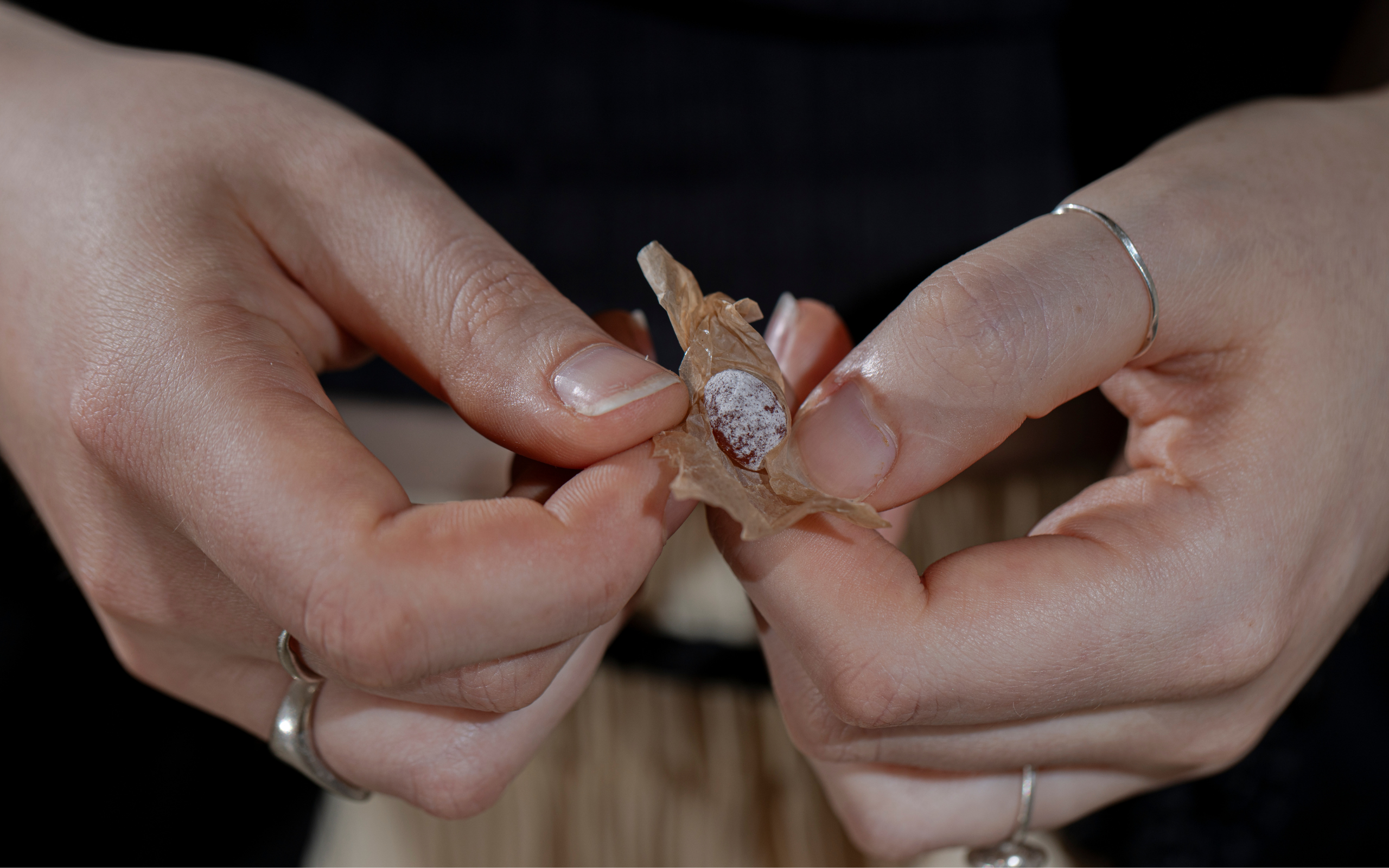
The relationship between the viewer and the artwork occupies a central place in Gocníková’s artistic practice. Rather than producing autonomous objects, her installations create multisensory environments in which taste, smell, sound and visual elements are woven together into a single experiential field. Within this space, the viewer becomes an active participant rather than a passive observer. Personal and collective memory converge at the familiar, yet ultimately inexplicable, intersection of the senses.
–
The exhibition is supported by the Slovak Institute in Budapest and the National Cultural Fund of Hungary.